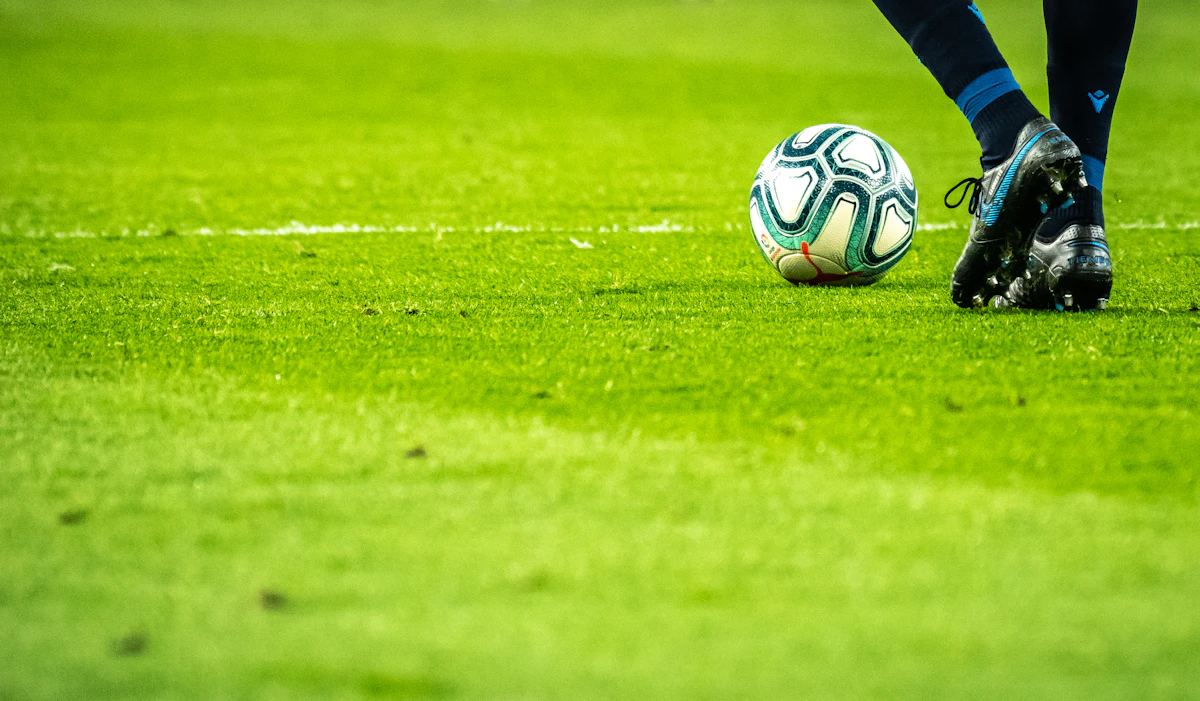
How to Finish Under Pressure: Mastering Composure in Front of Goal
Learn proven, science-backed methods to finish under pressure — from cognitive prep and physical economy to realistic drills and mental reframing. Transform anxiety into advantage.
Why Finishing Under Pressure Separates Elite Strikers from the Rest
In football, few moments carry more weight than the split second before a shot — when defenders converge, the goalkeeper charges, and 50,000 fans hold their breath. Finishing under pressure isn’t just about technique; it’s the intersection of mental resilience, spatial awareness, and motor control honed through deliberate practice. While many players possess elite dribbling or passing skills, it’s the ability to convert high-stakes chances — especially in tight spaces or late-game scenarios — that defines clinical forwards like Erling Haaland, Vivianne Miedema, or Mohamed Salah.
Pressure doesn’t only come from opponents. It stems from internal expectations, match context (e.g., a derby or cup final), fatigue, and even crowd noise. Research from the Journal of Sports Sciences shows that perceived pressure can reduce shooting accuracy by up to 27% — unless athletes train specifically for those conditions. That’s why finishing under pressure must be treated not as an innate trait, but as a trainable skill — one rooted in repetition, reflection, and realism.
The 3 Pillars of Pressure-Proof Finishing
1. Cognitive Control: Slowing Time Through Anticipation
Your brain processes information faster when it expects what’s coming. Top finishers don’t wait for the ball — they read cues: defender positioning, goalkeeper’s angle and weight distribution, teammate run timing, and even subtle shifts in body language. This ‘pre-action awareness’ buys precious milliseconds.
Practical drill: Use small-sided games (e.g., 3v3 in a 20x20m grid) with mandatory one-touch finishes. Add verbal cues (“left post”, “low and hard”) before the pass arrives — training your brain to anticipate shot type and direction. Record sessions and review decision speed vs. outcome. Over time, this builds neural pathways that make composure feel automatic, not forced.
2. Physical Economy: Efficiency Over Power
Many players tense up under pressure — shoulders rise, jaw clenches, stride shortens. This disrupts balance and reduces shot precision. Clinical finishers prioritize efficiency: minimal backlift, locked ankle on contact, and stable base (knee over foot, hips level).
Try this test: Stand 8 yards from goal. Take 10 shots using full backswing — note accuracy and recovery time. Then repeat with no backswing, striking cleanly off a half-volley or first-time pass. Chances are, your placement improves — because less motion means less room for error.
💡 Pro tip: Train finishing fatigued. Do 3 sets of sprints (20m x 6), then immediately attempt 5 one-touch shots from varying angles. This mimics end-of-game physiology — and teaches your body to execute technique when oxygen is low and nerves are high.
3. Emotional Regulation: Reframing Pressure as Privilege
Anxiety spikes when we view pressure as threat (“I’ll let the team down”). World-class finishers reframe it as opportunity (“This is why I train”). Neuroscience confirms: labeling emotions (“I feel nervous”) and assigning purpose (“My nerves mean I care — and that sharpens my focus”) activates the prefrontal cortex, dampening amygdala-driven panic.
Before matches, use a 60-second ritual: Breathe in for 4, hold for 4, exhale for 6, pause for 2. Repeat three times. Pair it with a personal mantra — e.g., “Clear eyes. Clean contact.” — spoken aloud. Consistency here rewires your stress response over weeks.
Realistic Drills to Build Pressure Resilience
Simulating pressure isn’t about shouting or adding consequences — it’s about authentic constraints. Here are three evidence-backed drills you can run solo or in groups:
🎯 The Mirror Shot Drill (Solo)
Set up a mirror or phone camera facing your shooting zone. Perform 10 shots while watching your own form in real time. Focus on:
- Head still, eyes on ball until after contact
- Non-kicking foot pointing at target
- Follow-through directed toward intended corner
Then, add distraction: Play crowd noise or commentary audio. Repeat. You’re training visual-motor integration while managing external stimuli — exactly what happens during live play.
⚔️ Defender Shadow Game (Small Group)
Two attackers vs. one passive defender (no tackling — only close marking and angle disruption). Attacker A receives, turns, and must shoot within 3 seconds — or pass to Attacker B, who must finish first-time. Rotate roles every 90 seconds. Track: % of shots placed on frame, not just goals. Why? Because hitting the target under duress is the first milestone — conversion follows with repetition.
📊 The ‘Game State’ Shooting Ladder
Create a scoring matrix tied to real match logic:
- Goal from open play in final third = 3 pts
- First-time finish after cross = 2 pts
- Shot under defender pressure (within 2m) = +1 pt bonus
- Missed chance due to hesitation (delay > 1.5 sec) = −1 pt
Aim for ≥12 pts in 5 minutes. Review video: Was hesitation caused by indecision (mental) or poor first touch (technical)? Address the root — not just the symptom.
🔗 Want more structured skill development? Explore our full football skills category for progressive drills across all positions.
Mental Habits of Clinical Finishers
Technique fades without mindset reinforcement. Observe how elite scorers behave between chances:
They reset instantly. After a miss, they jog back — no slumped shoulders, no blaming. They take one deep breath and refocus on the next opportunity. Emotionally, they treat misses like data points, not identity statements.
They visualize process, not outcome. Instead of “I’ll score,” they rehearse: “I see the keeper off his line → I cut inside → plant foot beside ball → strike low and early.” A 2023 study in Frontiers in Psychology found process-focused visualization improved shot accuracy by 19% more than outcome-only rehearsal.
They own the narrative. When interviewed, top finishers rarely say “I got lucky.” They say, “I trusted my prep.” That language reinforces agency — and trains the brain to associate pressure with preparation, not peril.
If you struggle with post-miss frustration, try this journal prompt weekly: “What did my body do well in that moment — even if the ball didn’t go in?” (e.g., “I held my shape,” “I picked the right moment to shoot”). Celebrating micro-wins builds sustainable confidence.
Your 4-Week Finishing Under Pressure Plan
Consistency beats intensity. Here’s how to integrate pressure training without burnout:
| Week | Focus | Weekly Commitment |
|---|---|---|
| 1 | Awareness & Breath | 3x/week: 10-min mirror drill + 5-min breathing + mantra work |
| 2 | Constraint Integration | 3x/week: Add defender shadow or audio distraction to 70% of shots |
| 3 | Fatigue + Decision Speed | 2x/week: Sprint-to-shoot ladder + 1x/week game-state scoring drill |
| 4 | Self-Review & Narrative Shift | Video 1 session/week; journal 3 wins per session; refine mantra |
Track progress not just in goals, but in:
✅ Shots on target % (aim for +5% MoM)
✅ Average decision time (target: ≤1.2 sec from receive to shot)
✅ Post-miss recovery time (goal: <8 seconds to reengage)
Remember: pressure doesn’t vanish — it transforms. With deliberate practice, it becomes familiar terrain, not hostile ground. And familiarity breeds fluency.
🌟 Ready to take your finishing to the next level? Get personalized feedback from our certified coaches — or dive deeper into tactical intelligence with our latest post on creating space in tight areas.
Finishing under pressure isn’t magic. It’s method. It’s muscle memory married to mindset. And every time you choose composure over chaos — even in training — you’re not just practicing a shot. You’re building the reflexes of a player who thrives when it matters most.